The enjoyment of a steak is enhanced when accompanied by a good sharp knife that will cut the meat like butter.
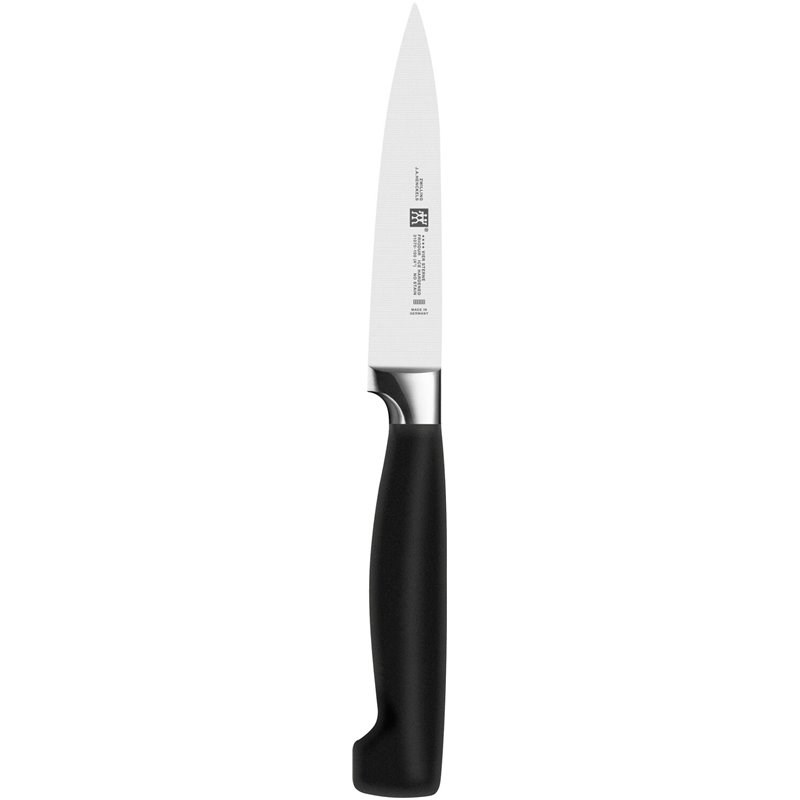
The steak knife is used for cooked food and provides easier cutting compared to regular eating knives. It has a serrated blade. It is ideal for steaks, chicken, ribs, and fish.
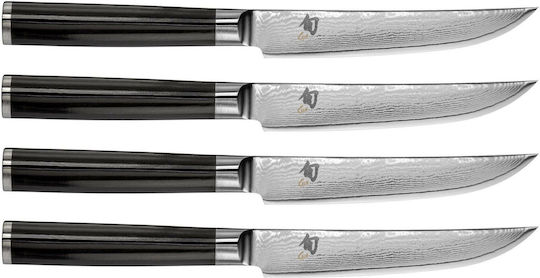
The entire core is made of VG MAX steel with a hardness of 61 (±1) HRC (a knife with a hardness above 56 HRC is considered good). Covered with 32 layers of Damascus steel, the knife represents unparalleled craftsmanship combined with a durable blade that is both hard and flexible thanks to its hybrid composition.
The length of the blade is 12 cm.
The slim handle made of durable pakkawood is based on the shape of a traditional Japanese chestnut. The high-quality resin added to the wood makes the material particularly strong and resistant to moisture. The chestnut shape provides a comfortable and secure grip during cutting, thanks to a small hollow in the handle.
The length of the handle is 10.5 cm.
Cutting is recommended on wooden or plastic cutting surfaces. Glass, stone, and marble cutting surfaces are unsuitable as they may cause permanent damage to the knife blades.
Wash the knife with warm water before using it for the first time. After each use, make sure to wash the knife immediately (with a mild detergent) and dry it with a soft cloth. Especially if you have cut acidic foods, you should wash the knife immediately after use.
For your own safety, you should always wipe the knife away from your body and away from its edge, using a cloth or towel.
It is not recommended to wash it in the dishwasher but by hand, in order to protect its material and maintain its sharpness for a long time.
No matter how sharp a knife is at first, after some use it needs sharpening, something you can achieve with a sharpener, sharpening stone, or strop.
You can tell if your knife cuts well with an easy test using the knife and a piece of paper. A sharp knife can easily and cleanly cut through a piece of paper. On the other hand, a knife that needs sharpening will struggle and its cut will be jagged.
It is also advisable to sharpen your knives with a professional occasionally, to fix any damage to the blade’s edge and to maintain sharpness.
The enjoyment of a steak is enhanced when accompanied by a good sharp knife that will cut the meat like butter.
The steak knife is used for cooked food and provides easier cutting compared to regular eating knives. It has a serrated blade. It is ideal for steaks, chicken, ribs, and fish.
The entire core is made of VG MAX steel with a hardness of 61 (±1) HRC (a knife with a hardness above 56 HRC is considered good). Covered with 32 layers of Damascus steel, the knife represents unparalleled craftsmanship combined with a durable blade that is both hard and flexible thanks to its hybrid composition.
The length of the blade is 12 cm.
The slim handle made of durable pakkawood is based on the shape of a traditional Japanese chestnut. The high-quality resin added to the wood makes the material particularly strong and resistant to moisture. The chestnut shape provides a comfortable and secure grip during cutting, thanks to a small hollow in the handle.
The length of the handle is 10.5 cm.
Cutting is recommended on wooden or plastic cutting surfaces. Glass, stone, and marble cutting surfaces are unsuitable as they may cause permanent damage to the knife blades.
Wash the knife with warm water before using it for the first time. After each use, make sure to wash the knife immediately (with a mild detergent) and dry it with a soft cloth. Especially if you have cut acidic foods, you should wash the knife immediately after use.
For your own safety, you should always wipe the knife away from your body and away from its edge, using a cloth or towel.
It is not recommended to wash it in the dishwasher but by hand, in order to protect its material and maintain its sharpness for a long time.
No matter how sharp a knife is at first, after some use it needs sharpening, something you can achieve with a sharpener, sharpening stone, or strop.
You can tell if your knife cuts well with an easy test using the knife and a piece of paper. A sharp knife can easily and cleanly cut through a piece of paper. On the other hand, a knife that needs sharpening will struggle and its cut will be jagged.
It is also advisable to sharpen your knives with a professional occasionally, to fix any damage to the blade’s edge and to maintain sharpness.
Steak Knives
The enjoyment of a steak is enhanced when accompanied by a good sharp knife that will cut the meat like butter.
The steak knife is used for cooked food and provides easier cutting compared to regular eating knives. It has a serrated blade. It is ideal for steaks, chicken, ribs, and fish.
Blade Material
The entire core is made of VG MAX steel with a hardness of 61 (±1) HRC (a knife with a hardness above 56 HRC is considered good). Covered with 32 layers of Damascus steel, the knife represents unparalleled craftsmanship combined with a durable blade that is both hard and flexible thanks to its hybrid composition.
The length of the blade is 12 cm.
Handle
The slim handle made of durable pakkawood is based on the shape of a traditional Japanese chestnut. The high-quality resin added to the wood makes the material particularly strong and resistant to moisture. The chestnut shape provides a comfortable and secure grip during cutting, thanks to a small hollow in the handle.
The length of the handle is 10.5 cm.
Cutting Surface
Cutting is recommended on wooden or plastic cutting surfaces. Glass, stone, and marble cutting surfaces are unsuitable as they may cause permanent damage to the knife blades.
Cleaning
Wash the knife with warm water before using it for the first time. After each use, make sure to wash the knife immediately (with a mild detergent) and dry it with a soft cloth. Especially if you have cut acidic foods, you should wash the knife immediately after use.
For your own safety, you should always wipe the knife away from your body and away from its edge, using a cloth or towel.
It is not recommended to wash it in the dishwasher but by hand, in order to protect its material and maintain its sharpness for a long time.
Sharpening
No matter how sharp a knife is at first, after some use it needs sharpening, something you can achieve with a sharpener, sharpening stone, or strop.
You can tell if your knife cuts well with an easy test using the knife and a piece of paper. A sharp knife can easily and cleanly cut through a piece of paper. On the other hand, a knife that needs sharpening will struggle and its cut will be jagged.
It is also advisable to sharpen your knives with a professional occasionally, to fix any damage to the blade’s edge and to maintain sharpness.
Steak Knives
The enjoyment of a steak is enhanced when accompanied by a good sharp knife that will cut the meat like butter.
The steak knife is used for cooked food and provides easier cutting compared to regular eating knives. It has a serrated blade. It is ideal for steaks, chicken, ribs, and fish.
Blade Material
The entire core is made of VG MAX steel with a hardness of 61 (±1) HRC (a knife with a hardness above 56 HRC is considered good). Covered with 32 layers of Damascus steel, the knife represents unparalleled craftsmanship combined with a durable blade that is both hard and flexible thanks to its hybrid composition.The length of the blade is 12 cm.
Handle
The slim handle made of durable pakkawood is based on the shape of a traditional Japanese chestnut. The high-quality resin added to the wood makes the material particularly strong and resistant to moisture. The chestnut shape provides a comfortable and secure grip during cutting, thanks to a small hollow in the handle.
The length of the handle is 10.5 cm.
Cutting Surface
Cutting is recommended on wooden or plastic cutting surfaces. Glass, stone, and marble cutting surfaces are unsuitable as they may cause permanent damage to the knife blades.
Cleaning
Wash the knife with warm water before using it for the first time. After each use, make sure to wash the knife immediately (with a mild detergent) and dry it with a soft cloth. Especially if you have cut acidic foods, you should wash the knife immediately after use.
For your own safety, you should always wipe the knife away from your body and away from its edge, using a cloth or towel.
It is not recommended to wash it in the dishwasher but by hand, in order to protect its material and maintain its sharpness for a long time.
Sharpening
No matter how sharp a knife is at first, after some use it needs sharpening, something you can achieve with a sharpener, sharpening stone, or strop.
You can tell if your knife cuts well with an easy test using the knife and a piece of paper. A sharp knife can easily and cleanly cut through a piece of paper. On the other hand, a knife that needs sharpening will struggle and its cut will be jagged.
It is also advisable to sharpen your knives with a professional occasionally, to fix any damage to the blade’s edge and to maintain sharpness.
Specifications
Product Number: DMS-400
Type: Steak
Material: Damascus Steel
Japanese: Yes
Professional Series: Yes
Household Use: No
Pieces: 4 pcs
Blade Length: 12 cm
Colour: Black
with Non-Stick Coating: No
Dishwasher safe: No
Specifications
Product Number: DMS-400
Type: Steak
Material: Damascus Steel
Japanese: Yes
Professional Series: Yes
Household Use: No
Pieces: 4 pcs
Blade Length: 12 cm
Colour: Black
with Non-Stick Coating: No
Dishwasher safe: No
Χαρακτηριστικά
Επισκόπηση
Αξιολογήσεις πελατών
Αξιολογήσεις
Δεν υπάρχει καμία αξιολόγηση ακόμη.
Κάνετε την πρώτη αξιολόγηση για το προϊόν: “KAI Shun Classic Set steak knife -Set DM-S400” Ακύρωση απάντησης
















































































 Επισκόπηση





Αξιολογήσεις
Δεν υπάρχει καμία αξιολόγηση ακόμη.